










- Windows
- Prisms
- Spherical Lenses
- Cylindrical Lenses
- Mirrors
- Beamsplitters
- Polarization Optics
- Singlet True Zero Order Waveplate
- Cemented True Zero Order Waveplate
- Cemented Zero Order Waveplate
- Optical Contact Zero Order Waveplate
- Air-Spaced Zero Order Waveplate
- Low Order Waveplate
- Multi-Order Waveplate
- Narrow Band Polarization Beamsplitter Cube
- Broadband Polarization Beamsplitter Cube
- Rotator
- Glan Taylor Polarizer
- Glan Laser Polarizer
- Glan Thompson Polarizer
- Glan Thompson Polarization Beamsplitter Cube
- Wollaston Polarizer
- Rochon Polarizer
- Broadband Polarization Beam Combiner
- Brewster Polarizer
- Brewster Window
- Coatings






Microsoft of the United States has achieved a major breakthrough in glass data storage technology, realizing for the first time long-term stable data storage on ordinary borosilicate glass. This advance makes it possible to use low-cost, readily available everyday glassware such as heat-resistant cookware as an ultra-long-term storage medium. The research, entitled *Microsoft team creates ‘revolutionary’ data-storage system that lasts for millennia*, was recently published in *Nature*.
The work is part of Microsoft’s Project Silica launched in 2019. Previously, the team could only store data on expensive custom fused silica glass. This breakthrough extends the medium to widely used borosilicate glass, greatly cutting material costs and access barriers. The researchers also improved data encoding and reading methods to boost practicality.
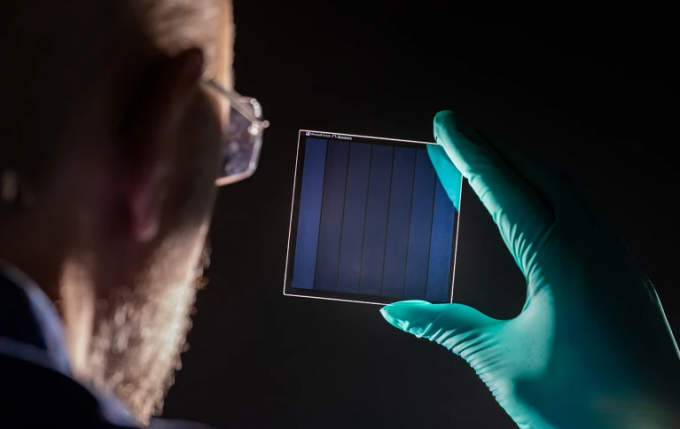
Microsoft’s glass storage method can hold up to 4.8 TB of data.
In experiments, the team wrote 4.8 terabytes of data (roughly equivalent to 200 4K movies) across 301 layers on a 120 mm × 2 mm borosilicate glass slice at a speed of 3.13 MB/s. While the write speed is far slower than conventional HDDs or SSDs, its core strength lies in extreme data longevity. Accelerated aging tests show data stored in glass can remain intact for more than 10,000 years, compared with an average lifespan of merely a decade for common hard drives.
Richard Black, co-author and partner research manager at Microsoft, stated the result removes a key barrier to commercialization — the cost and availability of storage media — while demonstrating parallel high-speed writing and long-term stability.
Glass storage is not designed for everyday computing devices. It targets archival scenarios requiring permanent or ultra-long-term data preservation, such as digital assets including cultural heritage records, scientific materials and legal documents. Microsoft has previously proposed using similar technology to permanently preserve music works in Norway’s global music archive.
Meanwhile, other research groups have advanced alternative long-term storage technologies. For instance, teams have developed DNA-based data storage capable of archiving massive volumes of information for tens of thousands of years under specific conditions, showing the potential of biological media for ultra-high-density storage. Together, these technologies aim to find reliable millennium-scale carriers for humanity’s growing digital heritage.